Bài đăng

Hiển thị các bài đăng có nhãn Vietnam

Simulation of Methane Emission from Rice Paddy Fields in Vu Gia-Thu Bồn River Basin of Vietnam Using the DNDC Model: Field Validation and Sensitivity Analysis

Hình ảnh
Irrigated rice cultivation plays an important role in affecting atmospheric greenhouse gas concentrations. In recent years, extrapolation and simulation of impact of farming management on GHGs fluxes from field studies to a regional scale by models approach has been implementing. In this study, the DeNitrification & DeComposition (DNDC) model was validated to enhance its capacity of predicting methane (CH4) emissions from typical irrigated rice-based system in Vu Gia-Thu Bồn River Basin with two water management practices: Continuous Flooding and Alternate Wetting-Drying.2 rice field experiments were conducted at delta lowland (Duy Xuyen district) and midland (Dai Loc district), considered as typical regions along topography transect of study areas. The observed flux data in conjunction with the local climate, soil and management information were utilized to test a process based DNDC model, for its applicability for the rice- based system. The model was further refined t...
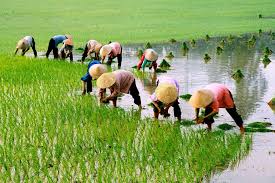
Developing GIS decision support to stakeholders on agricultural land use planning in HA Tinh Province, Vietnam

Hình ảnh
Land use planning in Vietnam has been conducted but still insufficient for many years. In rural areas, it has been predominantly relying on assessing the suitability of soil for agricultural production. Besides, the planning has extensively incorporated statistics. The current rapid economic growth of Vietnam during its economic transition has increased the pressure on land and water resources which leads to a necessity to adjust the approach to land use planning in order to support the economic growth of the country and provide a framework to manage the development in a sustainable manner. There is a need to have a closer alignment between socio-economic development plans, the overall environmental strategy and the land use plans. Therefore, the role of land use planning must be broaden through taking into account environmental, socio-economic parameters as well as involving different stakeholders who are affected by changes in land use. It is necessary to have a tool t...